Trauma-Informed Advocacy Course Helps Both Clients and Students
The Trauma-Informed Advocacy class, taught by social worker Lauren Choate in the Saint Louis University Legal Clinics, is grounded in the reality that “the vast majority of our clients have extensive histories of trauma.” Drawing on her work in the SLU Criminal Defense Clinic, Choate developed the course after seeing how quickly students recognize “the correlation between trauma and criminal justice involvement.” While that connection is especially apparent in criminal defense, the clinic reflects the shared experience across all clinical programs, where students represent clients who have endured “human and civil rights violations in prisons,” family separation, serious medical diagnoses, and unsafe housing.
A central goal of the course is helping students understand that trauma awareness is essential to effective advocacy. Understanding trauma is critical both to “building a relationship with your client” and to “getting them the best possible legal outcome,” Choate said. In criminal cases in particular, the course pushes against narratives that reduce clients to “a two-dimensional defendant whose life is reduced to the facts in a probable cause statement.” Students learn that zealous advocacy — especially at sentencing — requires the ability to answer difficult questions: “How did this person find themselves in this situation?” and “What would be meaningful in assisting them to move forward?”
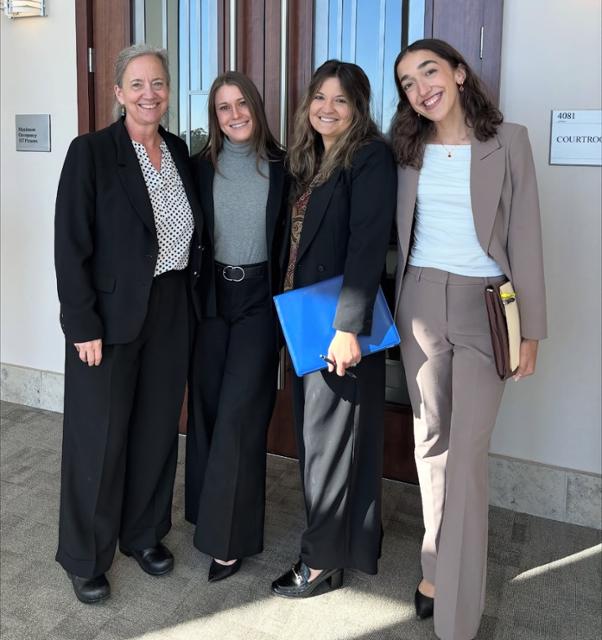
The course also addresses the emotional impact of legal work on students themselves. Choate notes that students frequently struggle not just with their clients’ trauma, but with “how it impacts you as their attorney, as well.” Doing this work means being “in relationship with people on the worst days of their lives,” and the clinic prepares students for the ways that exposure can affect them over time.
Formal training in trauma is presented as both a matter of competency and sustainability. Students learn to recognize vicarious trauma and moral injury so that they can “engage in this work long term.” As Choate emphasizes, trauma-informed lawyering helps attorneys “meet clients where they are,” leads to “better answers to your questions” and “increased client follow-through,” and limits the risk that clients are retraumatized by the legal process.
Ultimately, the course seeks to normalize the emotional realities of advocacy. One of the most meaningful moments for Choate is when students say, “I’m so relieved that this is normal.” The course reinforces that being affected by this work “is no indication of professional fit.” Instead, students are encouraged to carry forward the belief that “joy and camaraderie are a necessity,” and that supporting colleagues “working side by side with you is one of the only ways we can all succeed.”